

2025 electric vehicle comparison tool: 2025 electric automobile evaluation device is your manual to know-how what subjects whilst you compare EVs these days. Whether you’re in India, america or someplace else, this device helps you spot side-through-aspect how primary electric powered automobiles stack up in 2025. In this article, I compare specs, fees, real-global overall performance, and extra in a easy way—no jargon, no fluff
Why You Need an EV Comparison Tool
When human beings search for electric vehicle evaluation in India, or electric powered automobile comparison 2025, what they really want is a clean, side-through-aspect view of the key variations. You don’t need to dig through a couple of websites. A well-made tool (or data desk) can cut back weeks of studies into minutes.
Using this evaluation, you could:
- See which electric automobile offers you the quality variety in your money
- Judge which model is well worth its top rate
- Account for variations in charging, upkeep, and incentives
- Pick an EV desirable on your climate, using fashion, or location
Throughout this newsletter, I’ll display pattern comparisons and guide you on a way to interpret them.
What Criteria Matter in 2025 EV Comparisons
Any severe electric powered automobile assessment chart or electric powered automobile comparison desk should encompass these center standards:
Criterion
Why It Matters
Range (WLTP / MIDC / EPA)
Determines how far you can power earlier than recharging
Battery capability & battery chemistry
Impacts range, charging velocity, sturdiness
Charging (AC / DC fast charging)
Fast charging reduces downtime
0–a hundred km/h / performance
For many, acceleration and pressure feel matter
Price / fee in keeping with km / general price of possession (TCO)
Upfront fee vs running fee is important
Safety & capabilities / ADAS
Protects you and enhances the pressure experience
Warranty & battery degradation phrases
Sustains long-term cost
Availability & guide (service network, parts, charging stations)
You need provider and infrastructure in which you stay
When you spot “all electric automobile contrast,” you expect these metrics for multiple fashions. The relaxation of this newsletter uses these factors to evaluate actual 2025 EVs.
EV Snapshot: India & Global Market Trends in 2025
India
- In India, overall EV registrations crossed 1 million in H1 FY26, showing robust growth no matter a few dips in unique months. The Times of India
- Tesla released its Model Y in India in 2025, albeit at a top class due to import obligations. Reuters
- Local gamers are pushing tough: Tata Harrier EV, Mahindra XEV 9e / BE 6, and Tata Curvv EV are key domestic fashions. Wikipedia+3Wikipedia+3Wikipedia+three
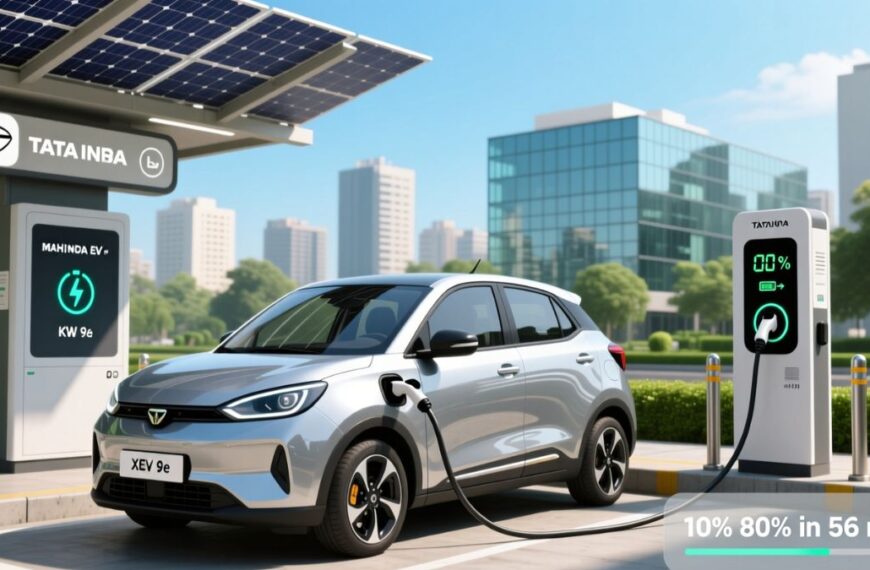
- For instance: Mahindra XEV 9e gives 59 kWh or 79 kWh battery options with claimed stages as much as 542–656 km (MIDC/WLTP) and dual speedy charging capability. Wikipedia
- Tata’s recently released Harrier EV claims as much as 627 km (MIDC) variety, helps a hundred and twenty kW DC fast charge, and springs with contemporary functions and protection ratings. Wikipedia
Global
- Globally, EV adoption continues to accelerate. In early 2025, over 4 million EVs were bought simply inside the first sector, up ~35% 12 months-on-year. IEA
- In many hooked up markets (USA, Europe), clients now count on sturdy rapid charging networks, advanced software program updates, and long warranties.
- Battery technology is moving: more LFP (lithium iron phosphate) and “blade” style batteries are used to reduce price and improve protection.
Sample Electric Vehicle Comparison Table (2025)
Here’s a simplified electric powered car contrast chart among four representative EVs competing in (or relevant to) India. Note: information is approximate or claimed.
| Model | Battery (kWh) | Range (km) | Range (km) | 0–a hundred km/h | Price (ex-showroom, India) | Noteworthy Features |
| Tata Harrier EV | 65 / 75 LFP | Up to 627 (MIDC) Wikipedia | 120 kW DC (20–80% ~25 min) Wikipedia | ≈ 6.3 s | ₹21.49 Lakh onward in India Wikipedia | ADAS features, 5-star Bharat NCAP |
| Mahindra XEV 9e | 59 / 79 LFP | ~542–656 (MIDC / WLTP) Wikipedia | ~140–175 kW DC Wikipedia | — | ₹21.90 Lakh onward CarDekho+1 | Strong performance, robust network |
| Mahindra BE 6 | 59 / 79 | 556 / 683 (ARAI) Wikipedia | 140–180 kW DC Wikipedia | .7 s Wikipedia | ~₹18.90–27.65 Lakh CarDekho+2CarWale+2 | Excellent range per Rs |
| Tata Curvv EV | ~ | ~ | ~ | ~ | Starts ~₹17.49 Lakh Wikipedia | Stylish coupe-SUV, 5-star rating Wikipedia |
How to Use a Comparison Tool: Step by means of Step
- Set your priority
- Range vs. Performance vs. Cost.
- If you pressure long distances, variety and fast charging rule.
- In town use, acceleration and capabilities may also depend extra.
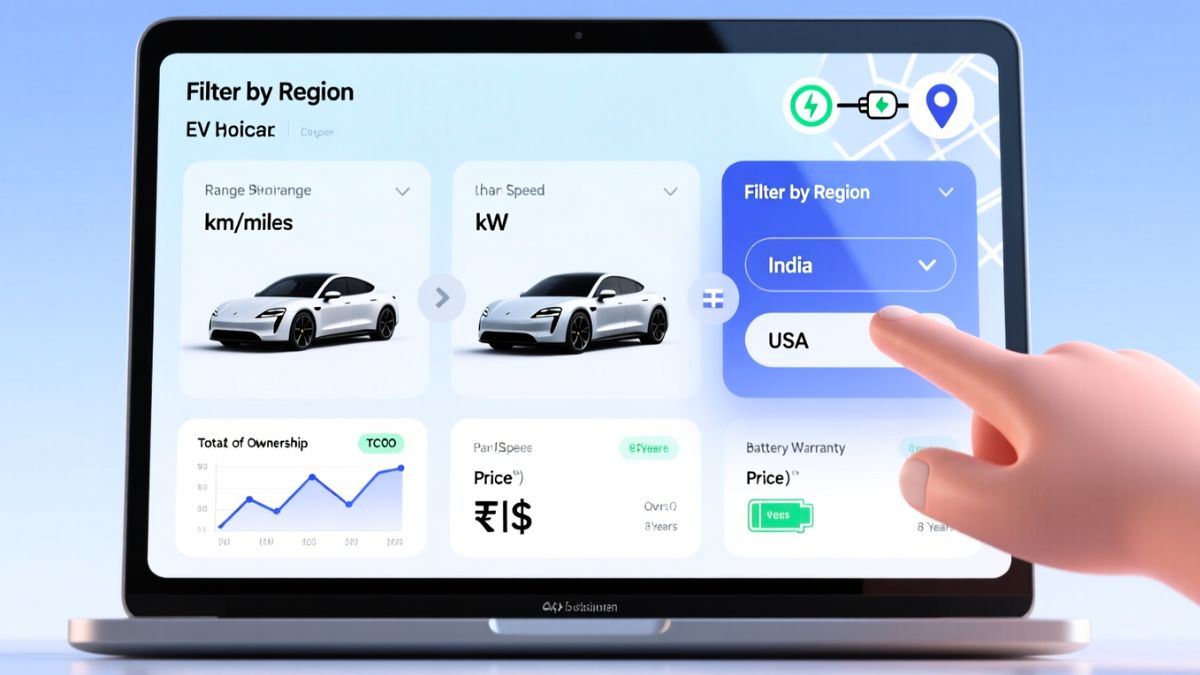
- Filter by using region / marketplace
- Use the device to clear out models available on your us of a.
- In India, many global EVs aren’t officially launched (or are very luxurious imports).
- Compare across multiple metrics
- Don’t just look at variety. Charging velocity, warranty, carrier community, and resale price all be counted.
- Check real-international records & reviews
- Sometimes claimed range is optimistic. Look for consumer-said range, battery degradation, and so on.
- Estimate overall value of ownership (TCO)
- Include power fees, preservation, coverage, battery replacement (if any) over years.
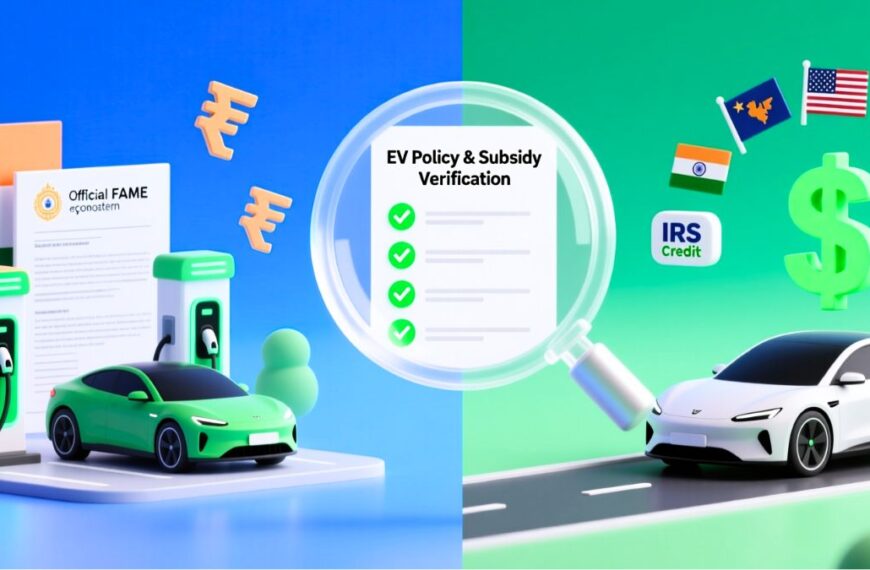
- Account for subsidies, incentives, tax guidelines
- In India, nation and important subsidies can lower powerful fee. In USA, tax credits can also follow. Always element those.
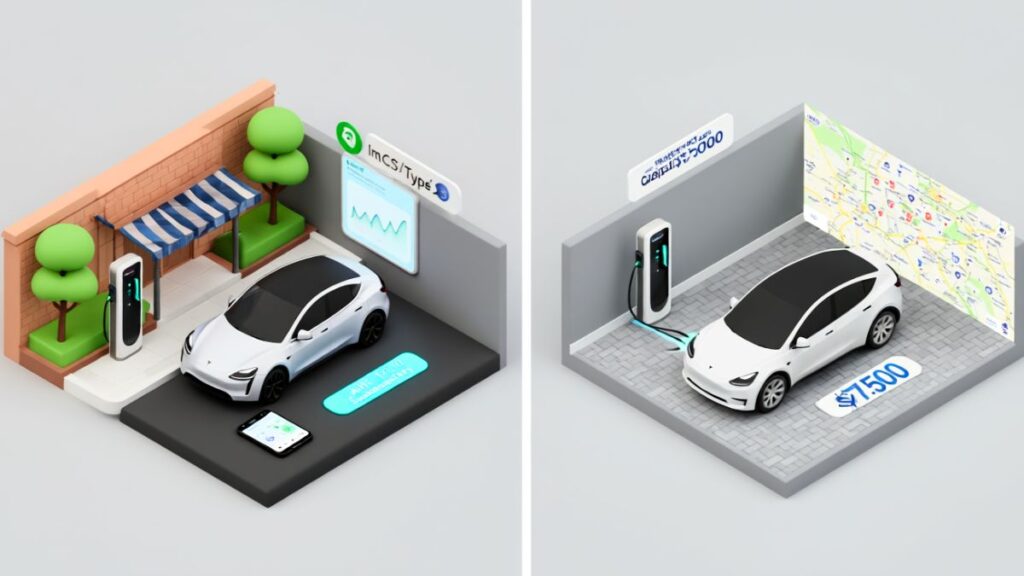
- Check infrastructure compatibility
- Does the EV help the fast charging standards commonplace for your vicinity (CCS, CHAdeMO, and many others.)? Are there enough chargers on your routes?
Region-Specific Notes
India
- The subsidy schemes (like FAME) and state-degree incentives vary.
- Charging infrastructure continues to be maturing in many areas—a few rural regions have few chargers.
- Local assist, spare components, and service community are key for peace of thoughts.
USA & Other Developed Markets
- The charging network is much denser; Tesla Superchargers, Electrify America, Ionity, and many others.
- Some EVs include over-the-air updates, self sufficient driving capabilities, and robust warranties (8–10 years).
- Tax credits (e.G. The U.S. Federal EV tax credit) can appreciably lessen fee.
Pros & Cons: Why Use a Comparison Tool
Pros
- Save time: as opposed to evaluating model by using model, you get facet-by-side insights.
- Reduce errors or bias: seeing statistics in a neutral layout helps you discover tradeoffs.
- Adaptability: excellent tools allow you to add or do away with fashions, metrics, filters.
Cons / Cautions
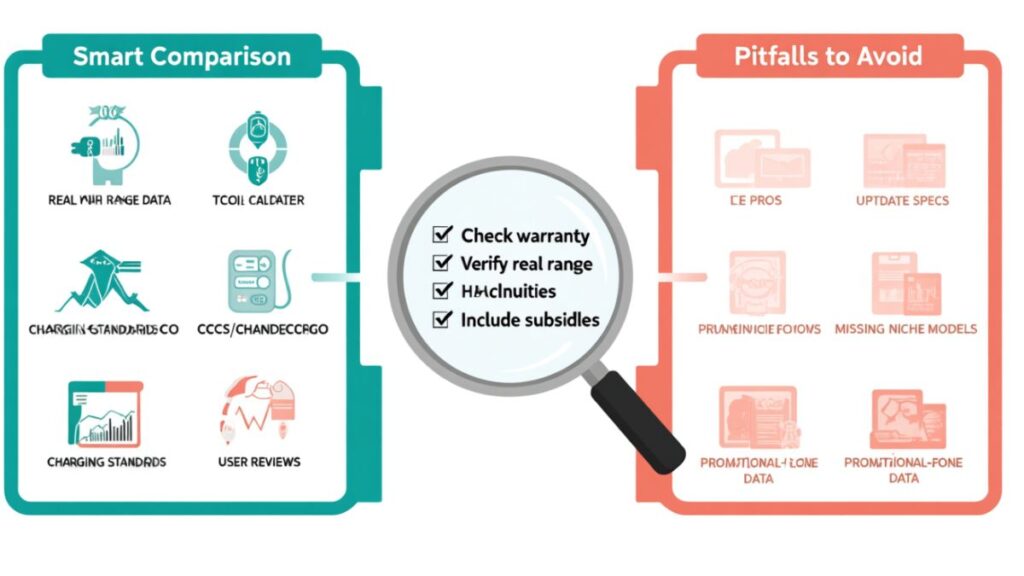
- Data may be promotional or positive—constantly double-take a look at real consumer opinions.
- Some niche or imported models might not appear.
- Market adjustments (new battery tech, coverage changes) could make older comparisons stale.
Quick Tips for Better Comparison
- Use both the claimed (WLTP / MIDC / EPA) and real-international figures from reviewers.
- Always examine charging time for each AC and DC, now not simplest top DC kW score.
- Check battery guarantee (as an instance, eight years / 160,000 km) and ensures on degradation.
- Factor in charging infrastructure availability where you live or travel.
- Don’t forget about resale cost or recognition—models with stronger call for often preserve cost.
Why Your Next Search Might Be “Electric vehicle contrast chart 2025 India”
Because humans don’t look for “EV specs table” as a great deal as they seek “electric powered car evaluation India 2025”. A device or article with a compelling chart will fulfill those seek intents, and assist your content material carry out well, even on systems like Google Discover.
FAQs for 2025 Electric Vehicle Comparison Tool
- Q1: Which EV has the longest range in India in 2025?
As per manufacturer claims, models like Mahindra BE 6 (79 kWh) claim ~683 km (ARAI) Wikipedia. But real-world range will often be 20–30% lower.
- Q2: Are imported EVs (like Tesla) worth considering in India?
You can compare, but high import duty makes them costly. Use the comparison tool to factor in total cost (including taxes).
- Q3: Is it safe to trust claimed charging speeds?
They are useful benchmarks, but in real life they depend on battery state, temperature, and charger quality. Always subtract ~15–25% from claims.
- Q4: How often should I run a comparison tool?
At least once a year. As new models arrive and specs improve, old comparisons become stale.
- Q5: Can I compare two-wheelers or three-wheelers in the same tool?
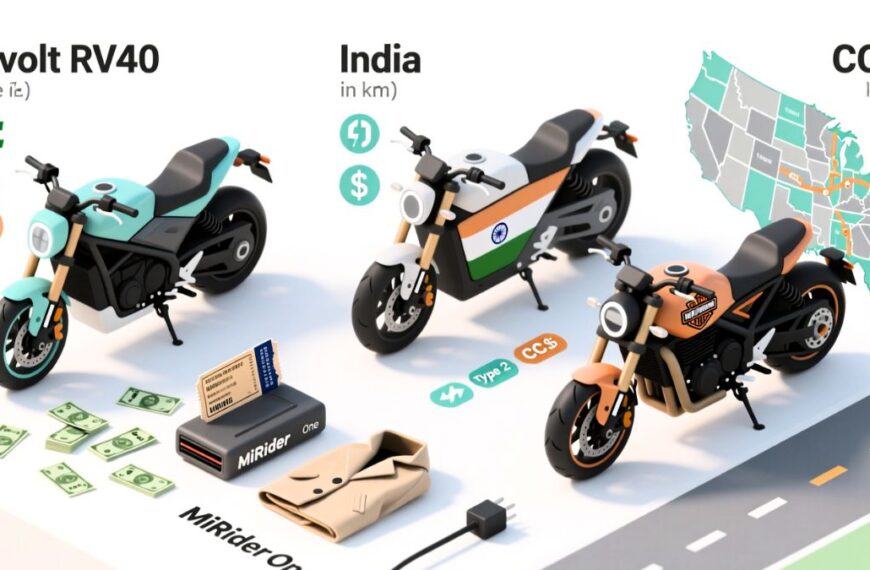
Yes – use the same metrics (range, battery, charge, price) but just in separate sections. Many users want “all electric vehicle comparison” including 2W, 3W, 4W.

 By
By