
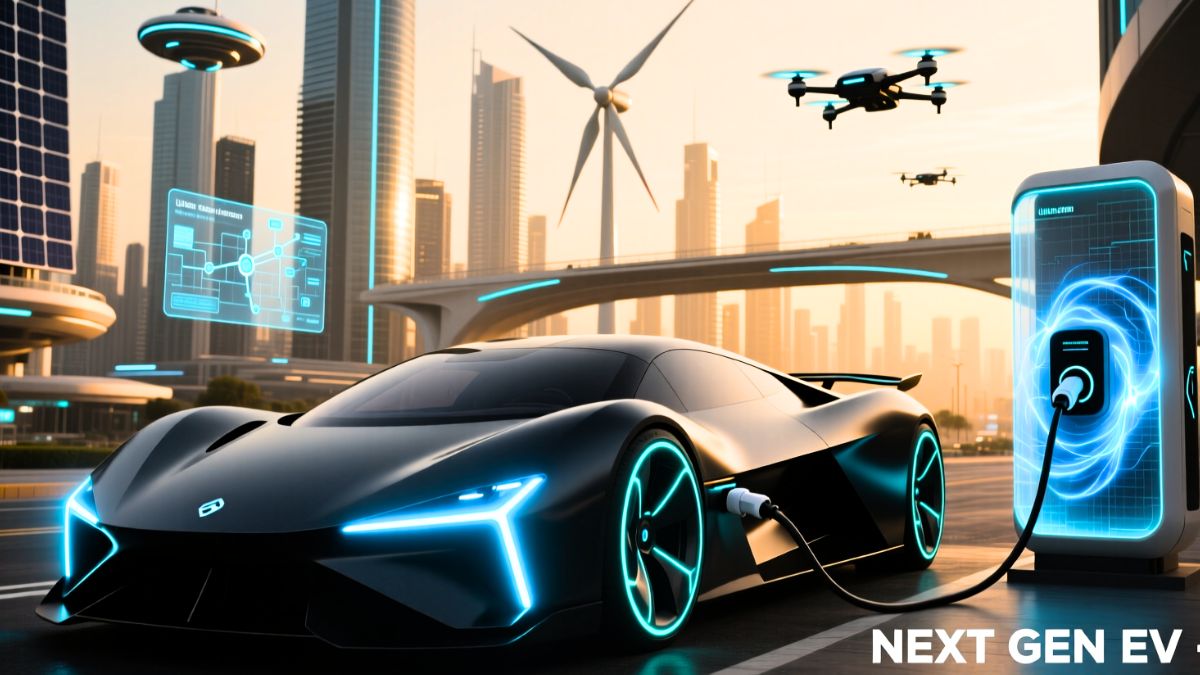

Electric Vehicle Future Technology is more than pretty much automobiles running on batteries. It is ready how we are able to journey within the coming years—purifier, smarter, and faster. Today, EVs are already converting how humans flow in India, the USA, and across the world. But the actual excitement lies in what’s coming subsequent.
Current Status of Electric Vehicles
Right now, electric powered vehicles are at a turning factor. Global sales are growing each yr. In India, government subsidies and schemes like FAME are supporting adoption. In the us and Europe, EVs are becoming mainstream with manufacturers like Tesla, BYD, Tata, Hyundai, and many others pushing new models.
Still, there are challenges. Charging stations are not anywhere. Batteries are expensive. Long charging times make humans worry. These are precisely the areas in which destiny era is stepping in.
Battery Technology Innovations
The coronary heart of each EV is the battery. That’s why future EV generation is focusing especially on this vicinity.
- Solid-State Batteries: Unlike today’s lithium-ion, stable-state batteries promise better variety, faster charging, and much less fireplace hazard. Toyota and Samsung are already trying out them.
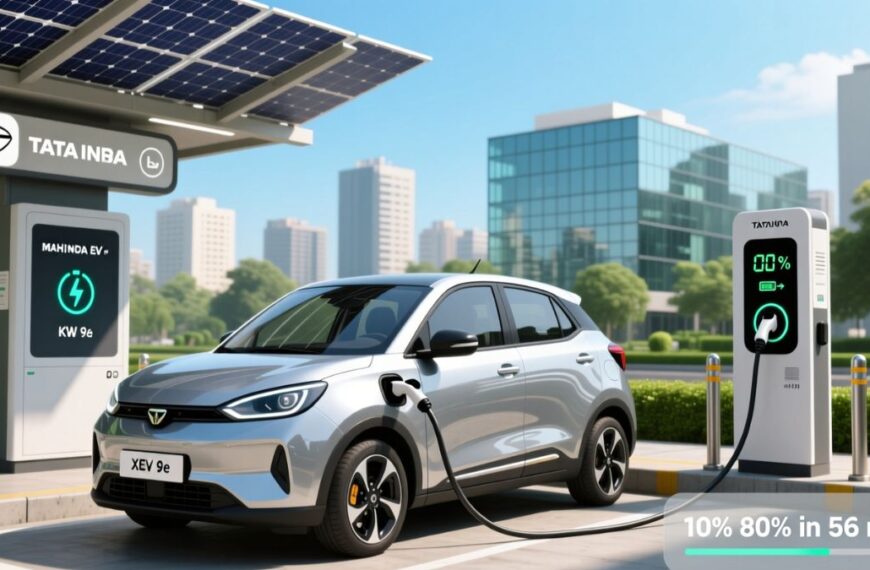
- Fast & Wireless Charging: Imagine charging your EV in 10 minutes or with out plugging in—just like putting a cellphone on a wireless pad. Companies are experimenting with this.
- Battery Recycling: Old batteries won’t go to waste. They may be reused for energy garage or recycled for fresh raw materials.
- Bigger Capacity: Future batteries may want to make automobiles run 1,000 km on a single charge.
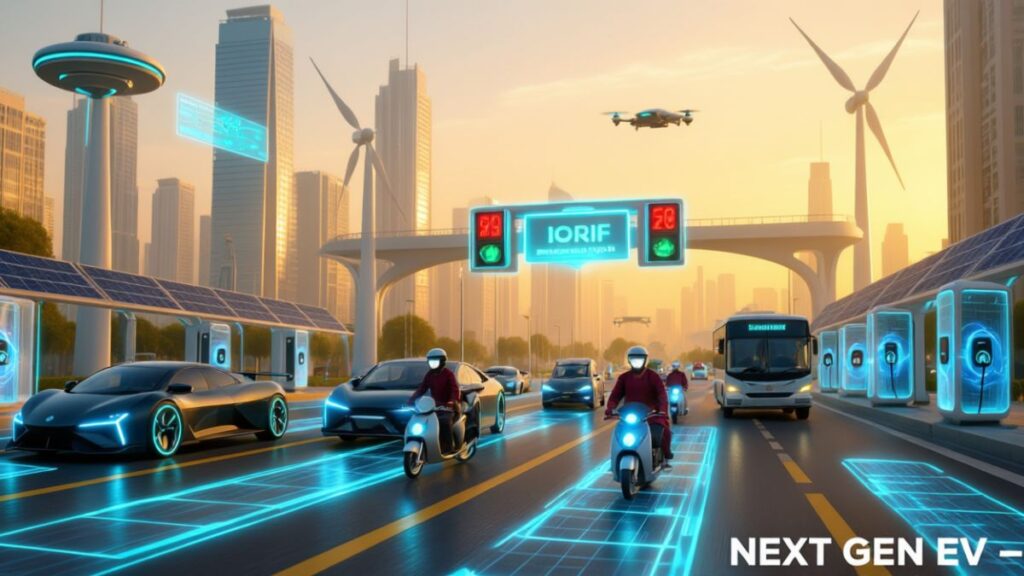
These changes should make EVs as clean to apply as petrol motors, or maybe higher.
Charging Infrastructure of the Future
Charging is a ache factor today, but the following day it could be handy.
- Ultra-Fast Charging: Stations that top off your battery in 10–15 mins.
- Smart Charging with AI: Charging that adapts to energy call for, reducing costs for both consumers and the grid.
- Vehicle-to-Grid (V2G): Your EV won’t simply rate—it can ship power returned to the grid, supporting houses and organizations for the duration of strength cuts.
India has commenced constructing charging corridors alongside highways. The USA is operating on coast-to-coast charging routes.
Artificial Intelligence & Software in EVs
Tomorrow’s EVs gained’t simply be about automobiles and batteries; they will be smart machines on wheels.
- AI Driving Assistants will help predict routes, warn of risks, and store power.
- Predictive Battery Management will amplify battery existence by tracking utilization styles.
- Over-the-Air Updates will maintain cars fresh, similar to updating a phone.
Tesla already leads here, but Tata, Mahindra, and Hyundai are catching up rapid.
Autonomous Driving & EV Synergy
Self-riding cars and EVs are like two sides of the same coin. Autonomous era calls for superior sensors, AI, and electric structures to function satisfactory.
- In the USA, Tesla and Waymo are testing self-riding fleets.
- In India, we’re slower, but trials are taking place in constrained zones.
- Europe is building rules for secure use of independent EVs.
The blend of EV and autonomy could redefine mobility within the next decade.
Renewable Energy Integration
Charging EVs from coal power vegetation received’t assist the planet a lot. That’s why the destiny links EVs with renewables.
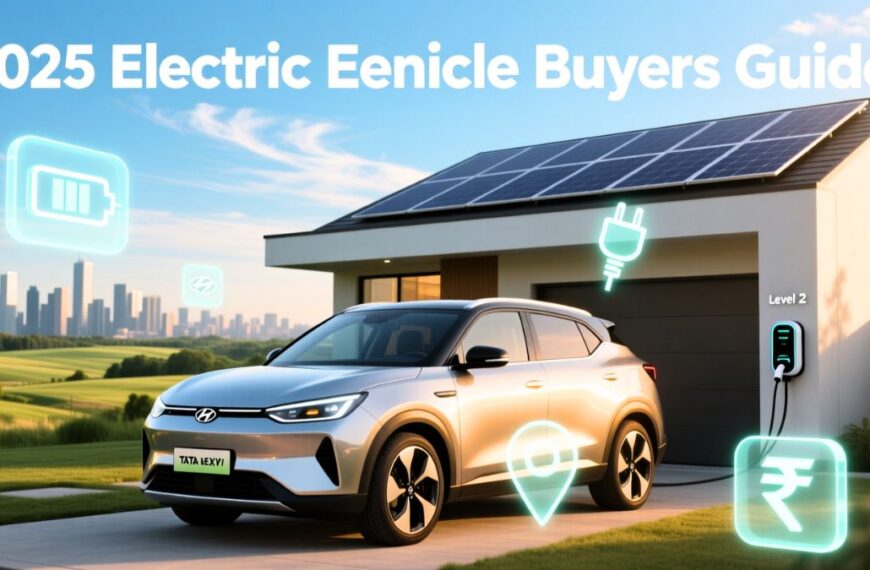
- Solar-Powered EVs: Cars like the Lightyear One use sun panels immediately on the vehicle.
- Wind Energy for Charging: Some charging hubs run on wind farms.
- Hybrid Sources: A mix of solar, wind, and hydro will make sure green charging.
In India, sun charging stations are growing in states like Gujarat and Rajasthan.
EV Design & Manufacturing Innovation
EV era is not handiest approximately batteries. The way motors are constructed is likewise changing.
- Lightweight Materials: Graphene, aluminum, and composites cut weight and boost performance.
- 3-d Printing: Companies can print vehicle parts, lowering costs and speeding up manufacturing.
- Sustainable Supply Chain: Manufacturers are making sure mining and transport of uncooked materials are eco-friendly.
Future EVs will not only be powerful but additionally eco-aware from begin to complete.
The Indian Context
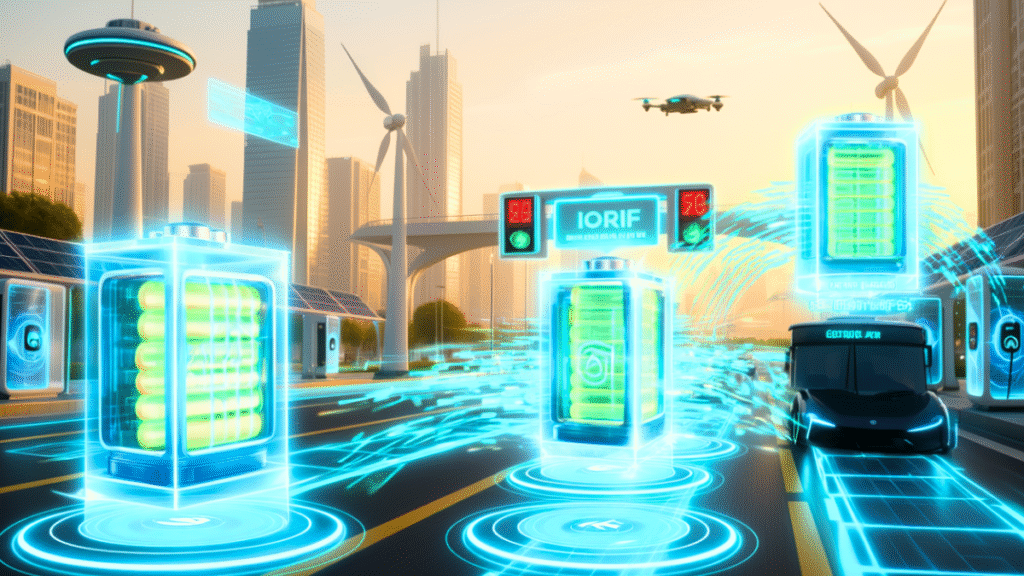
India’s EV marketplace is specific. Unlike the USA, where big motors dominate, here two-wheelers and 3-wheelers are leading the exchange. Ola Electric, Ather, and Bajaj are remodeling mobility.
- Government schemes like PLI (Production-Linked Incentive) are boosting neighborhood production.
- Indian startups are innovating in charging, battery swapping, and low cost EVs.
- By 2030, India needs 30% of vehicles to be electric.
Compared to China and the us, India remains growing but transferring rapid.
Challenges in Future EV Adoption
Even with all of the promise, there are actual obstacles.
- High Battery Costs nonetheless make EVs high-priced.
- Raw Material Supply like lithium and cobalt is restricted.
- Recycling Challenges want higher infrastructure.
- Charging Gaps in rural India and growing international locations remain unsolved.
These ought to be tackled earlier than EVs completely replace petrol motors.
Future Outlook
By 2030, EVs could be cheaper than petrol automobiles. By 2040, maximum new automobiles sold may be electric. Globally, analysts are expecting EV sales will move 100 million devices yearly.
India, with its younger populace and tech-driven startups, might be one in all the largest EV markets. The USA will lead in innovation, while China will dominate production.
The future of EV technology is shiny—and it is arriving faster than maximum people expect.
Conclusion
The story of Electric Vehicle Future Technology is ready a great deal extra than just motors. It’s about converting how human beings circulate, strength their lives, and protect the environment. From stable-nation batteries to AI-driven clever mobility, the next 10 to twenty years will transform transportation for all time. India, america, and the relaxation of the world are heading into an electrifying future—literally.
FAQs for Electric Vehicle Future Technology
- Q1: What is the maximum promising EV generation for the destiny?
Solid-country batteries are taken into consideration the game-changer because of their protection, rapid charging, and high capability.
- Q2: Will EVs grow to be inexpensive than petrol automobiles?
Yes, specialists predict through 2030 EVs ought to value much less than conventional motors, mainly as battery charges fall.
- Q3: Can India end up a global EV hub?
India has strong potential with its local production, authorities regulations, and startups, but charging infra need to amplify quicker.
- Q4: How long will EVs take to rate within the destiny?
With ultra-speedy charging, maximum EVs may want to fee in under 15 minutes.
- Q5: Will EVs completely update petrol and diesel motors?
By 2040, maximum new vehicles can be electric powered, though some petrol/diesel motors will still exist in far flung areas.

 By
By