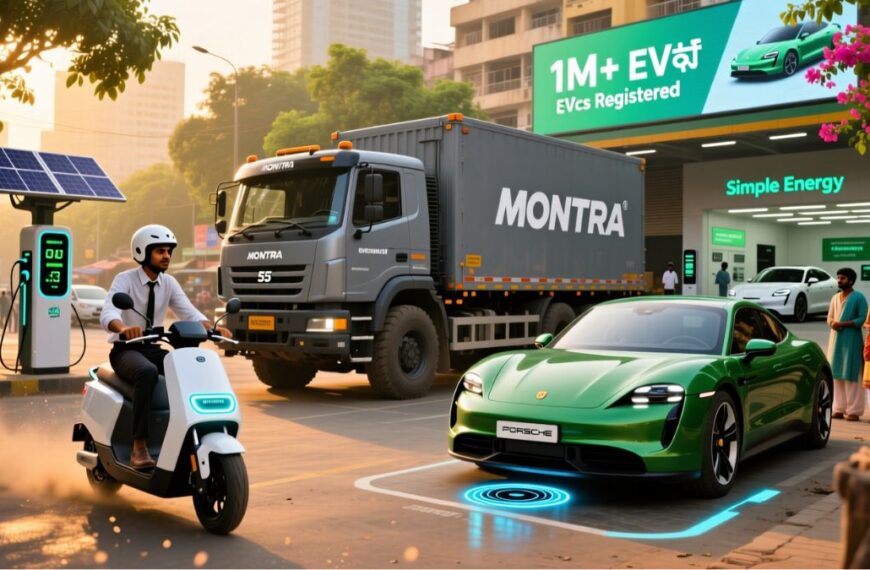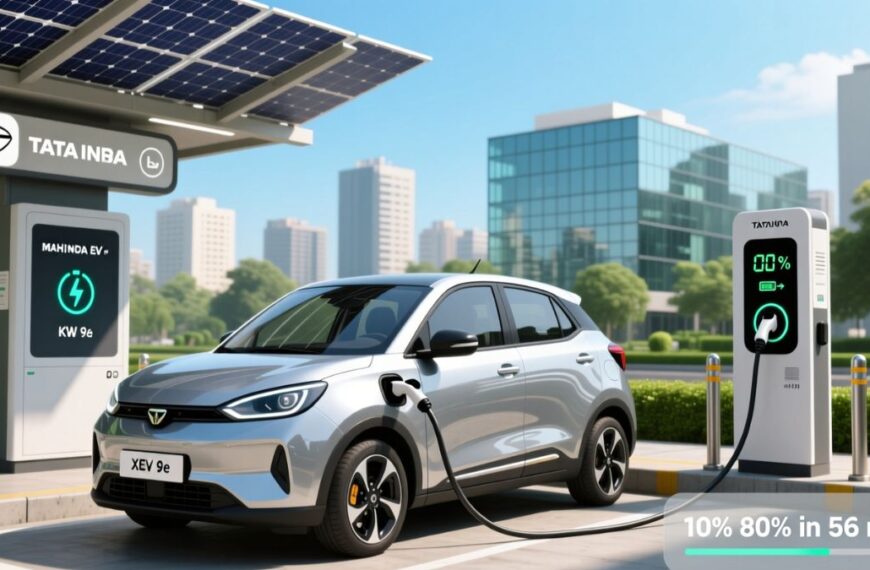

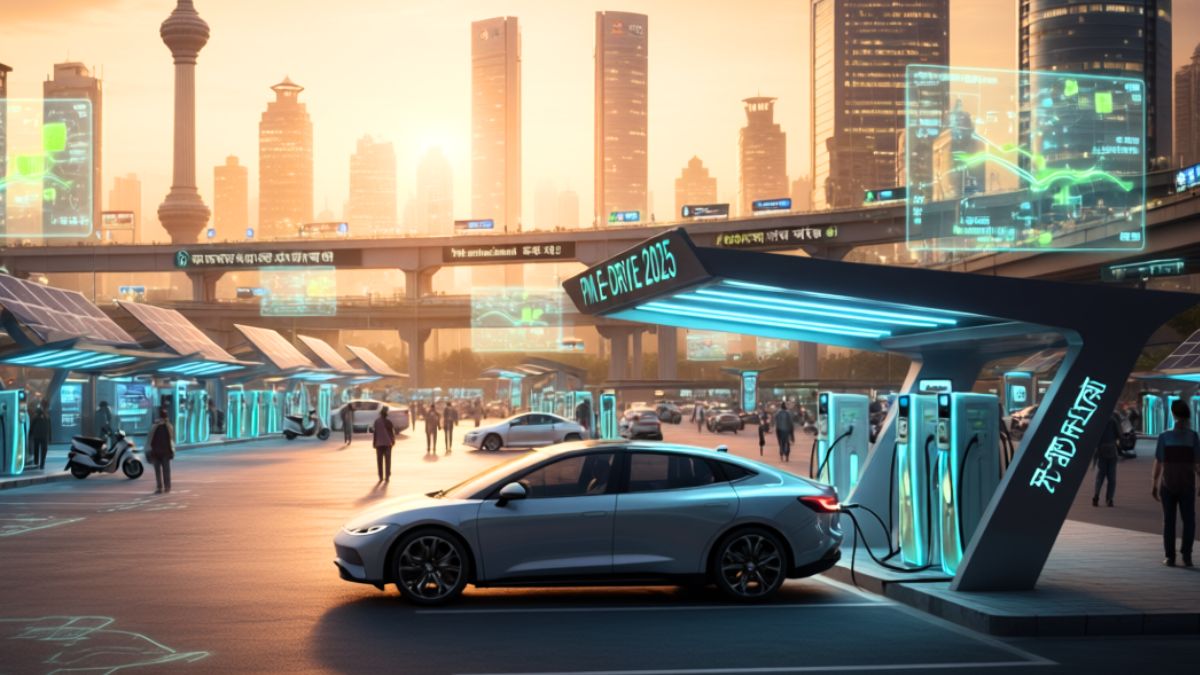

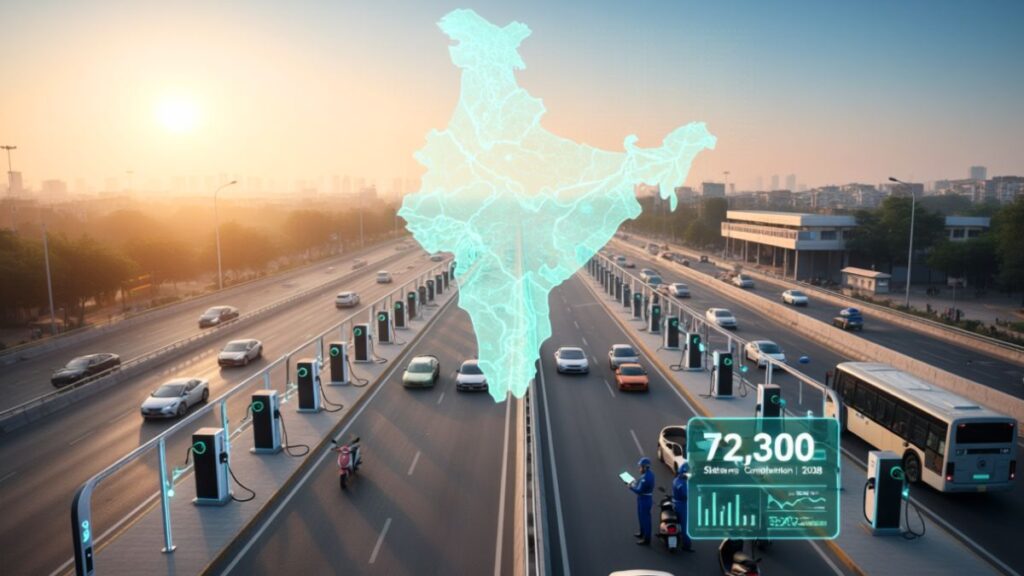
PM E-DRIVE Scheme 2025 is the Indian authorities’s most ambitious plan yet to make electric mobility mainstream. Announced in overdue September 2025, the program will see the installation of nearly 72,300 public charging stations over the subsequent three years. Backed through a ₹2,000 crore crucial outlay (part of a bigger ₹10,900 crore initiative), this rollout isn’t always pretty much plugging vehicles into chargers—it’s about constructing an entire EV environment that evokes self assurance amongst consumers, businesses, and vacationers alike.
This mission directly tackles the most important hurdle for EV adoption: variety tension. By setting chargers in towns, cities, highways, airports, bus stations, or even residential colonies, the government targets to make charging as convenient and familiar as filling up petrol.
Why PM E-DRIVE Scheme 2025 Matters
For years, specialists said that India’s EV dream could best come to be actual while charging infrastructure caught up with income. Until now, many potential customers hesitated because of the fear of being stranded with out a charger.
The PM E-DRIVE Scheme 2025 is designed to put off that fear by using building a dense and reliable charging grid. Union Minister for Heavy Industries, Dr. Anil Kumar, placed it without a doubt:
“This is not just about chargers. It’s about accept as true with. If human beings recognise they could discover a charger at their office, their clinic, or maybe their nearest metro station, they’ll buy EVs with out hesitation.”
How the Subsidy System Works
The authorities has created a tiered subsidy version to ensure the most reachable and public-friendly locations get most help.
1. Full Subsidy for Free-Access Sites
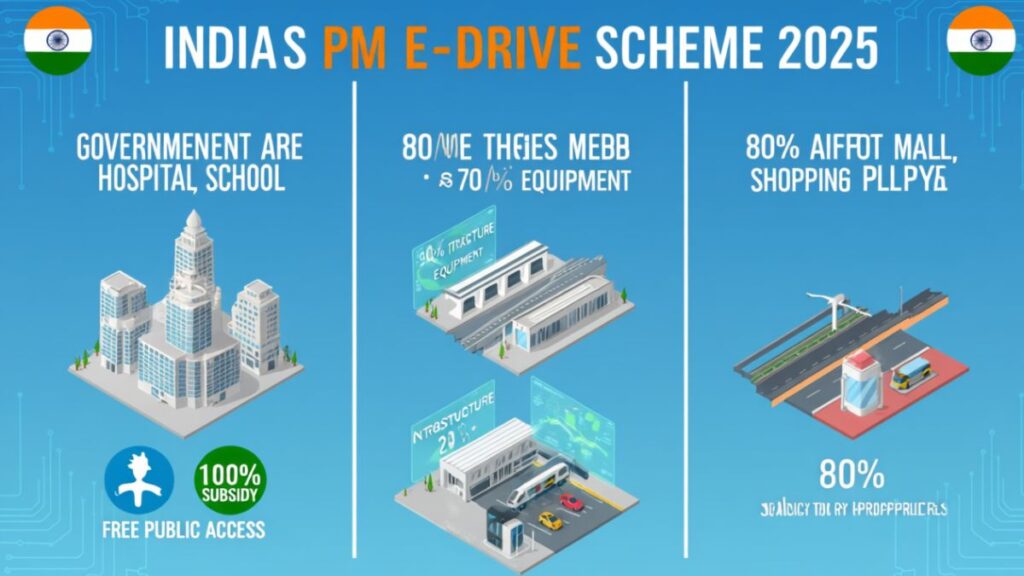
Government places of work, housing colonies, hospitals, and faculties will get a hundred% guide for infrastructure prices if their chargers are open to the general public.
2. Big Support for Busy Public Hubs
Places like railway stations, AAI airports, metro hubs, bus depots, and municipal parking masses will receive:
- eighty% subsidy on infrastructure
- 70% subsidy on system
Even kingdom-run fuel pumps and toll plazas will be covered, so EV proprietors gained’t sense unnoticed whilst motorway tourists refuel.
3. Corridor & Commercial Boost
For buying shops, markets, motorway rest areas, and private corridor operators, the scheme covers eighty% of upstream infrastructure costs. Importantly, battery swapping stations—essential for two- and three-wheelers—may also qualify.
Where Will the Chargers Go?
The rollout will focus on:
- Tier-1 and Tier-2 towns with populations over 1 million.
- All nation capitals and smart towns.
- Metro satellite tv for pc towns.
- High-density shipping corridors for intercity tour.
This approach both city commuters and lengthy-distance tourists will gain.
Who Will Implement It?
The government has assigned Bharat Heavy Electricals Limited (BHEL) as the Project Implementation Agency. BHEL will oversee deployment, set overall performance benchmarks, and song compliance.
A new digital portal will cross stay subsequent week, in which private organizations, startups, and transport government can put up proposals. Subsidies might be disbursed in two tranches, tied to undertaking milestones and operational overall performance.
The first batch of chargers is expected to be operational in Delhi-NCR, Mumbai, Bengaluru, Chennai, and Hyderabad within 60 days.
Bigger Picture: Why the PM E-DRIVE Scheme 2025 Is a Game-Changer
This scheme is greater than simply hardware. It is the foundation of India’s EV destiny:
- It reduces oil dependence.
- It strengthens climate commitments.
- It creates new opportunities for startups and private buyers.
- It normalizes EV ownership for normal people.
For global observers within the USA, Europe, and Asia, this initiative shows how a developing country can take bold, large-scale steps in inexperienced mobility.
Final Word
The PM E-DRIVE Scheme 2025 isn’t always simply any other coverage announcement—it is the turning factor in India’s EV adventure. By March 2028, with over 72,000 chargers in region, India may additionally finally triumph over its biggest roadblock to mass EV adoption.
If a success, this program becomes a model for other international locations struggling with the same task: the way to give humans the self assurance to head electric with out compromise.

 By
By